

Because Korea never switched materials. While bamboo and lacquered wood won out in China and Japan, Korean chopsticks stayed metal: bronze and silver for the court and the upper class at first, stainless steel for everyone since the second half of the 20th century. That makes Korea the only country in East Asia where flat metal chopsticks are normal at the dinner table. The famous story about poison-revealing silver is part of it, but not the whole answer.
The thing about the silver
The story goes like this: at the court of the Joseon dynasty the king ate with silver cutlery, because silver turns dark on contact with poison. A passive early warning system against assassination attempts, which later trickled down through society from the top. You find this story in almost every text about Korean cutlery.
Chemically it only half works. Silver tarnishes when it meets sulfur compounds, and arsenic used to be extracted from sulfur-bearing ores, so it was contaminated with sulfides. Cleanly produced arsenic, on the other hand, leaves silver untouched, while a hard-boiled egg discolors it reliably. As a poison test, the method was therefore unreliable in both directions.
Above all, though, it does not explain the beginning. The oldest known chopsticks from Korea are made of bronze and come from the tomb of King Muryeong of Baekje, who reigned from 501 to 523, around nine hundred years before Joseon. Metal was on the Korean table long before any king expected protection from it. The silver story explains why metal at court was especially loaded with prestige. Why it was metal in the first place, it does not explain.
The unspectacular reason: metal simply lasts longer
Metal chopsticks do not swell up, splinter or warp, and they take on no smells. You can boil them, put them in the dishwasher and use them for decades. A pair of stainless steel chopsticks usually outlives the piece of furniture whose drawer it lies in.
Korean food also asks a good deal of the cutlery. 반찬 (Banchan), the small side dishes, are often salty, sour and red; kimchi is only the best-known example. Wood soaks that up, metal does not.
Flat instead of round — and what the neighbors do differently
Korean chopsticks have a flat, roughly rectangular cross-section. A common explanation for this is manufacturing: flat stock can be cut and pressed from sheet metal, which is the simplest option for mass production. A solid round metal rod would also be noticeably heavier in the hand.
For comparison: Chinese chopsticks are the longest and end bluntly — practical when you are reaching across a large table into shared bowls. Japanese ones are shorter and taper to a point, which helps when dealing with fish and bones. These functional explanations are plausible and get told everywhere, but they are later interpretation rather than a documented origin story.
수저 (Sujeo): the spoon belongs with it
In Korea there is always a spoon lying next to the chopsticks. The set of the two is called 수저 (Sujeo), contracted from 숟가락 (Sutgarak, spoon) and 젓가락 (Jeotgarak, chopsticks). The division of labor is clear: rice and soup you eat with the spoon, the side dishes with the chopsticks.
That is the real difference from Japan, and you notice it immediately. There you lift the rice bowl and bring it to your mouth. In Korea the bowl stays on the table and the spoon goes to the rice; lifting the bowl counts as bad manners. If Korean chopsticks strike you as shorter than you are used to, that is part of the reason: they do not have to carry a whole meal.
A second rule is just as widespread: you do not hold the spoon and the chopsticks in the same hand at the same time. You put one down before you pick up the other, especially at a table with older people.
Why they feel like tools at first
Metal is smooth, flat is narrow, and the two together mean: whatever you pick up slips. Wood and bamboo have friction and hold almost by themselves, stainless steel demands a clean grip. That makes Korean chopsticks the most uncomfortable version for beginners, no matter how well you manage in a Japanese restaurant.
What helps:
- Hold them further down, closer to the tips. That shortens the lever and you need less force.
- The lower chopstick does not move. It lies in the hollow between thumb and index finger and rests on the ring finger. Only the upper one moves, like a pen.
- Grip with the flat sides, not with the edges: more area, more contact.
- Many sets have grooved or roughened tips. If you have the choice, take those.
- Grip calmly instead of squeezing hard. With smooth metal, more pressure mainly makes the food flick away.
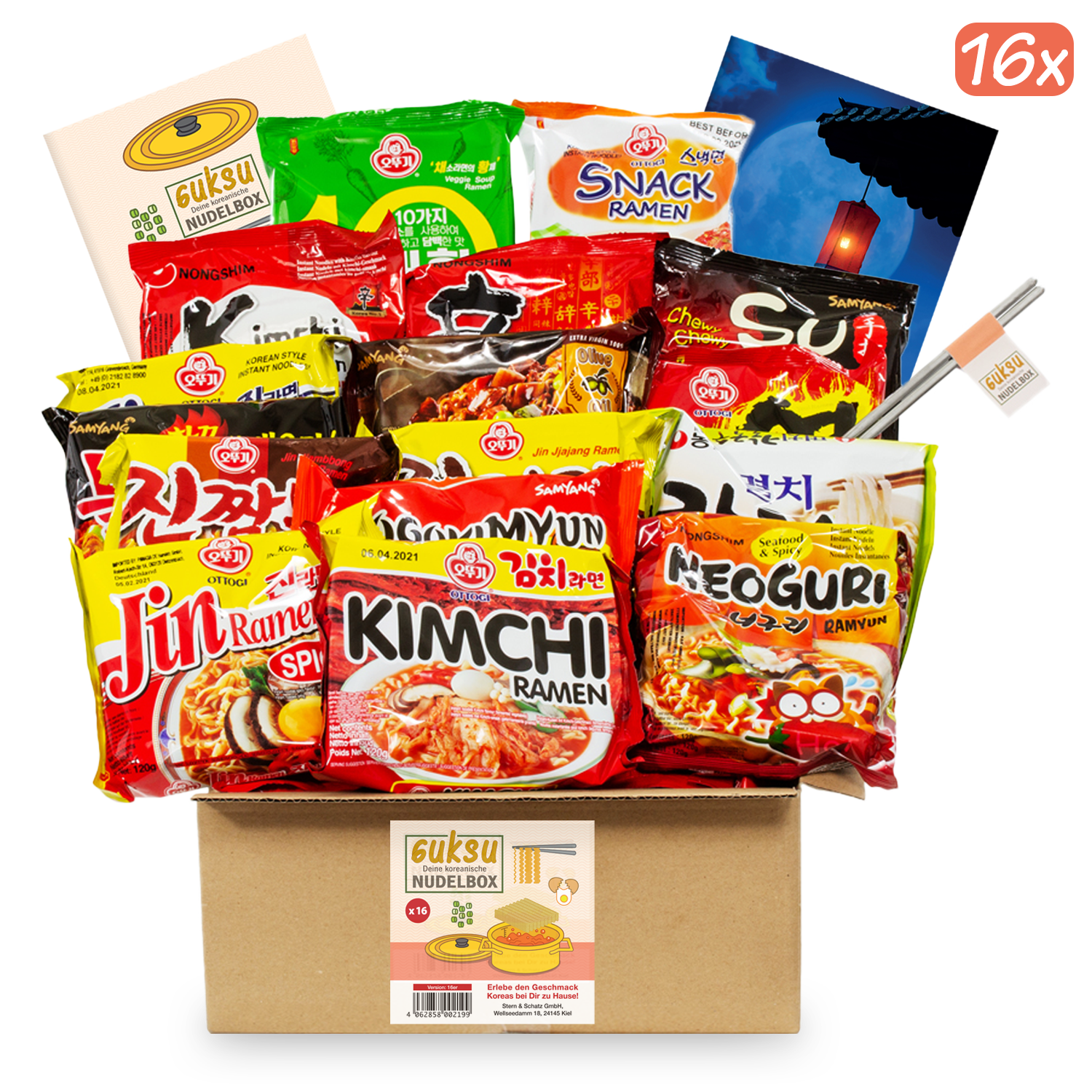
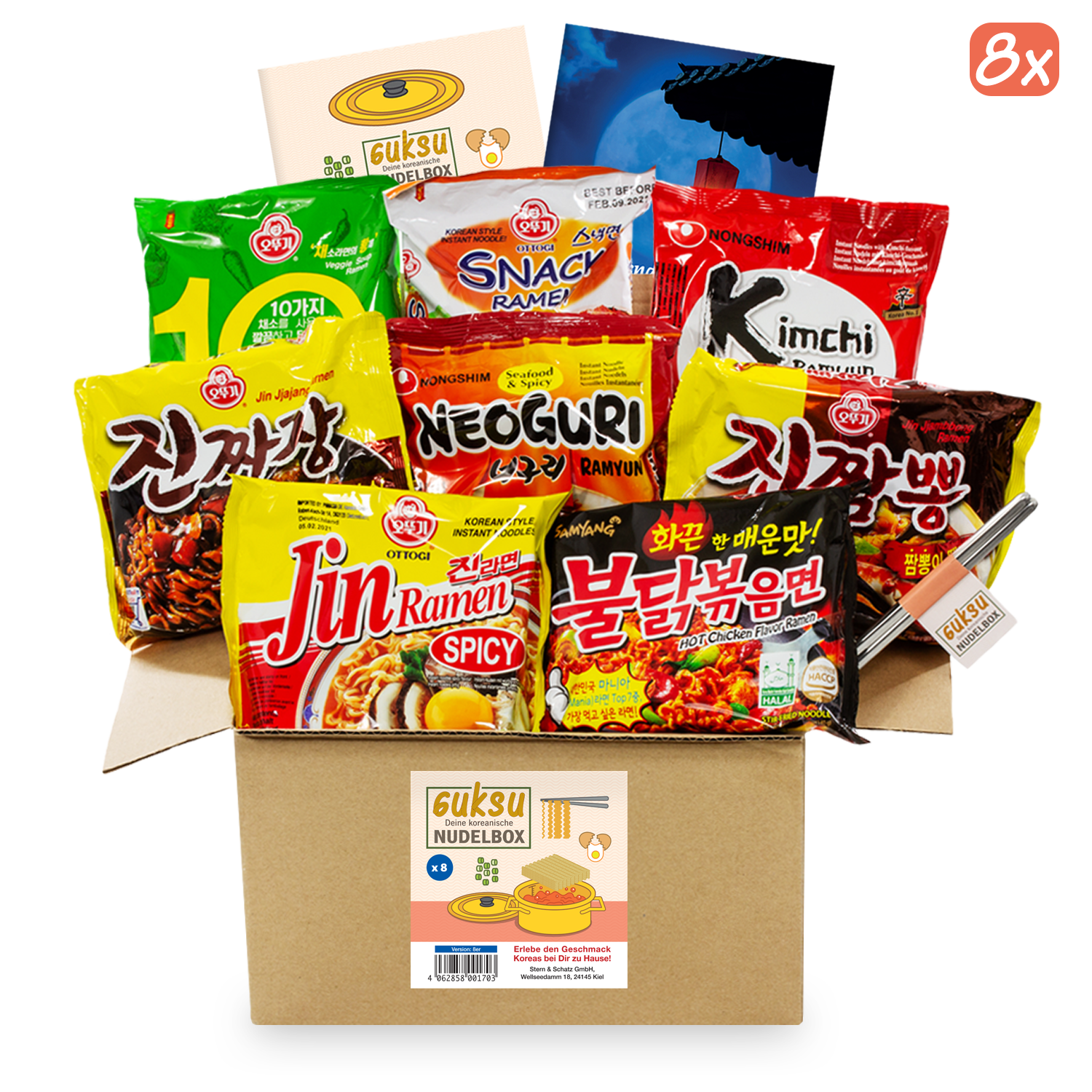
Anything big and grippy works for practice: pieces of meat, rice cakes, thick noodles. Single grains of rice and glass noodles you save for later. The Guksu noodle box comes with a pair of metal chopsticks. Noodles are the most rewarding thing Korean cooking has to offer for practice anyway, because they hold surprisingly well between two smooth surfaces.
What is left at the end
Metal chopsticks are thus neither a quirk nor pure symbol, but the result of one and a half millennia of metalworking, a cuisine full of salty side dishes and a table order in which the spoon does the main work. The silver story is a pretty chapter in that, but only one.
That the things slip is the price. It gets smaller the more often you have them in your hand — and at some point wooden chopsticks feel oddly soft the other way round.



Leave a comment
This site is protected by hCaptcha and the hCaptcha Privacy Policy and Terms of Service apply.