Thai instant noodles taste different
The Thai flavor profile runs on sourness: lime, tamarind, chili and fish sauce, often tuned to tom yum. That sets it audibly apart from Korean noodles, whose heat comes from gochujang over a sweetish base, and from Japanese ones, which lean on soy sauce and miso broth instead.
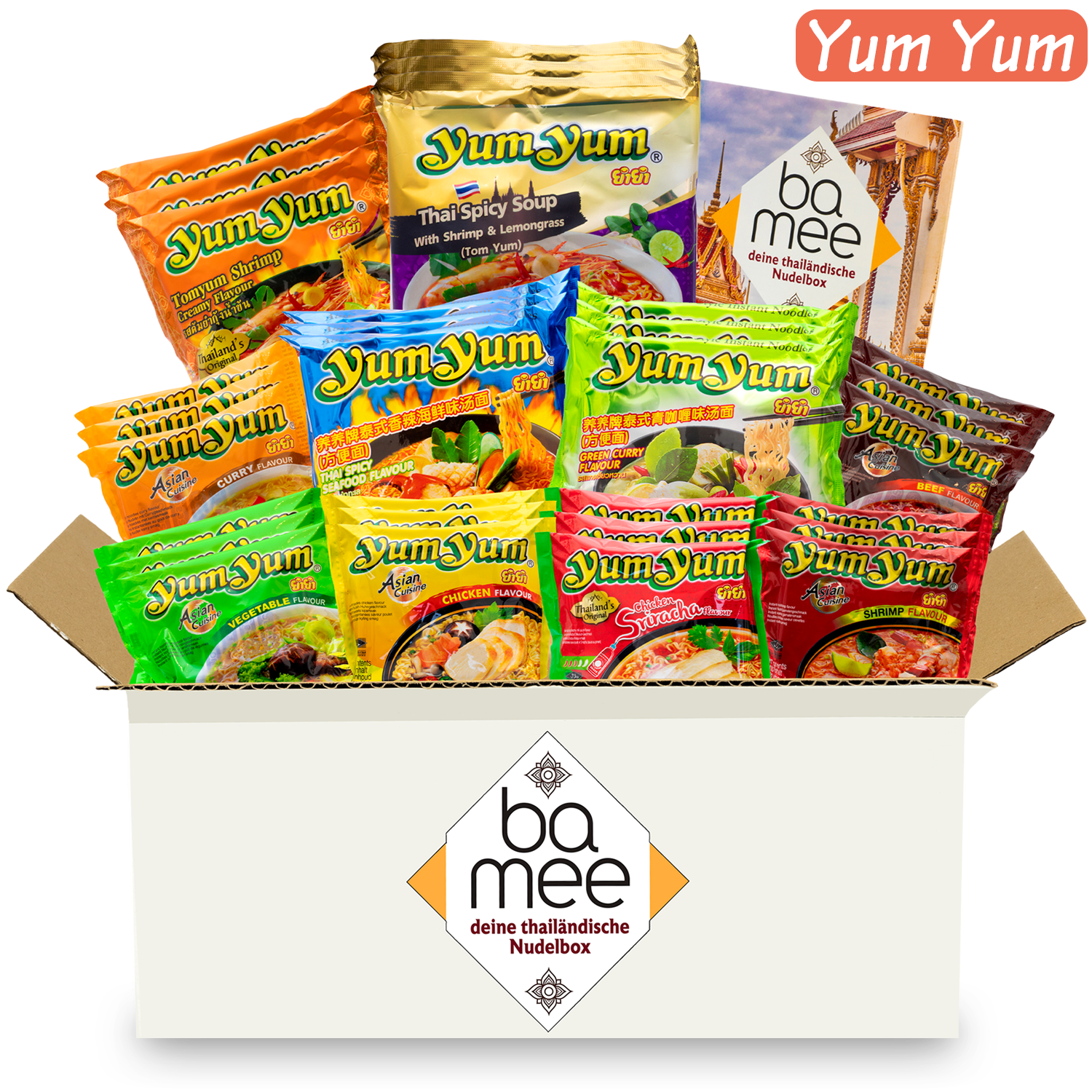
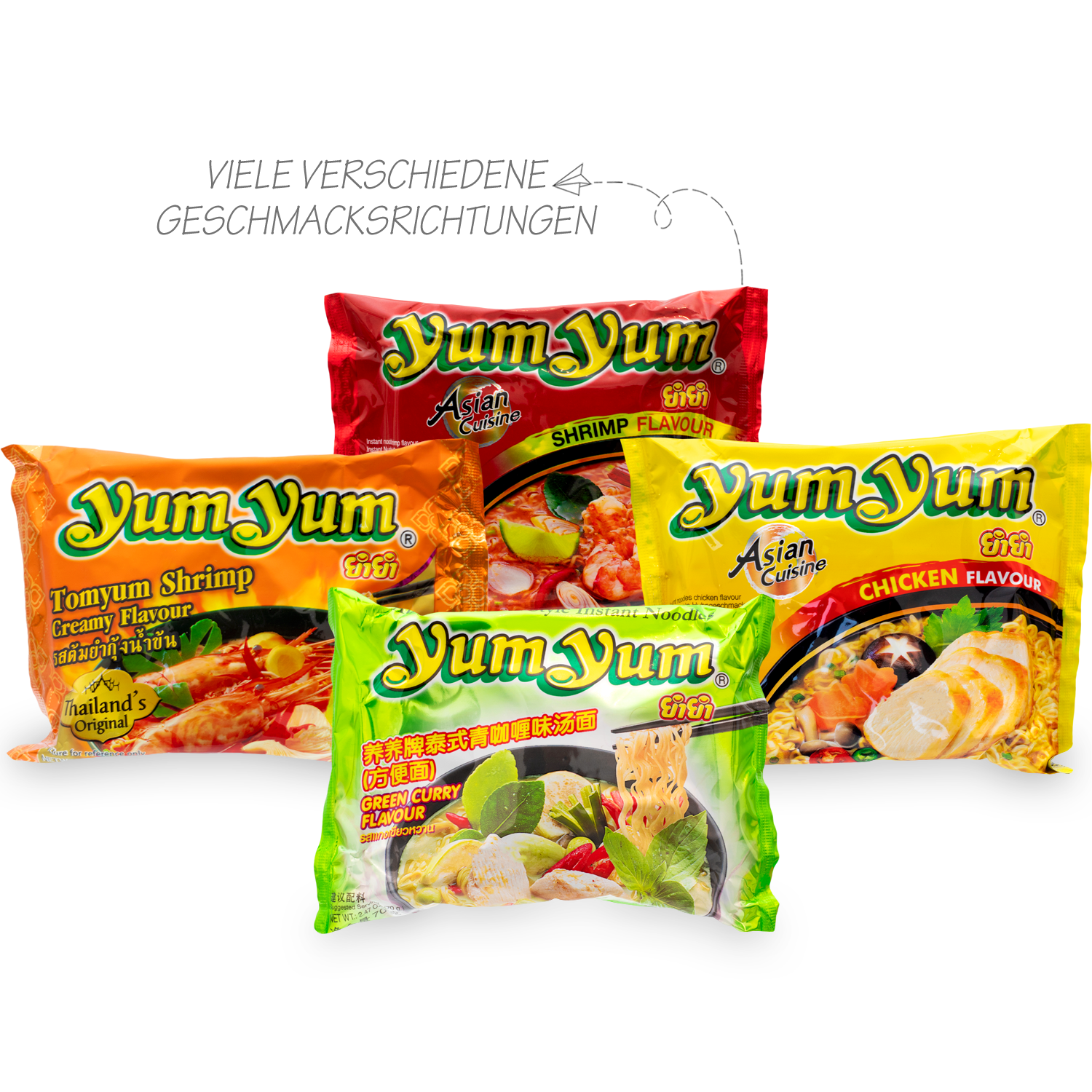
Ba mee is simply the Thai word for egg noodle: thin, yellowish, and at a street kitchen often served dry with sauce rather than in soup. MAMA and YUM YUM are the two brands nobody in the country gets past; their packets are basic stock in every kiosk.
Which box suits you
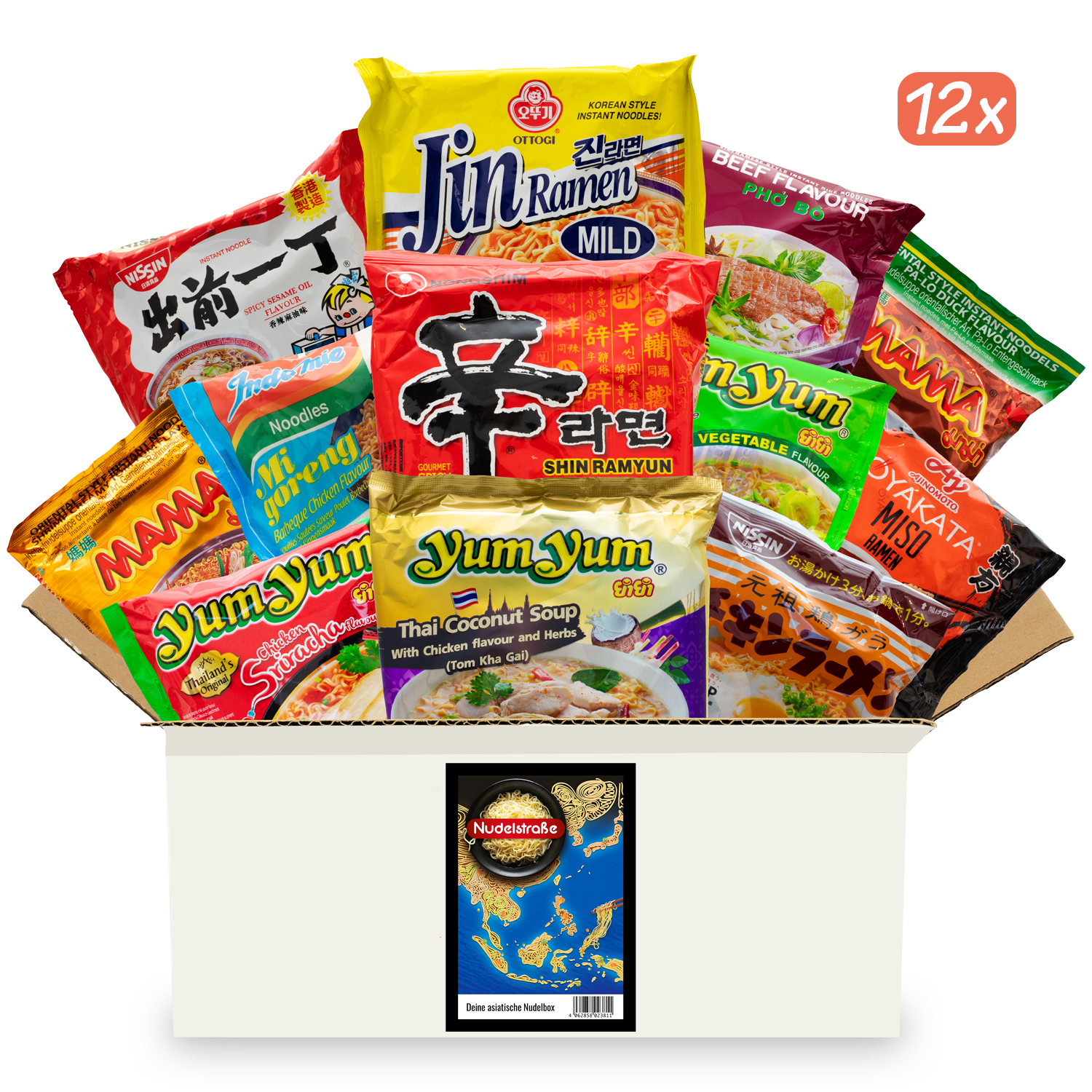
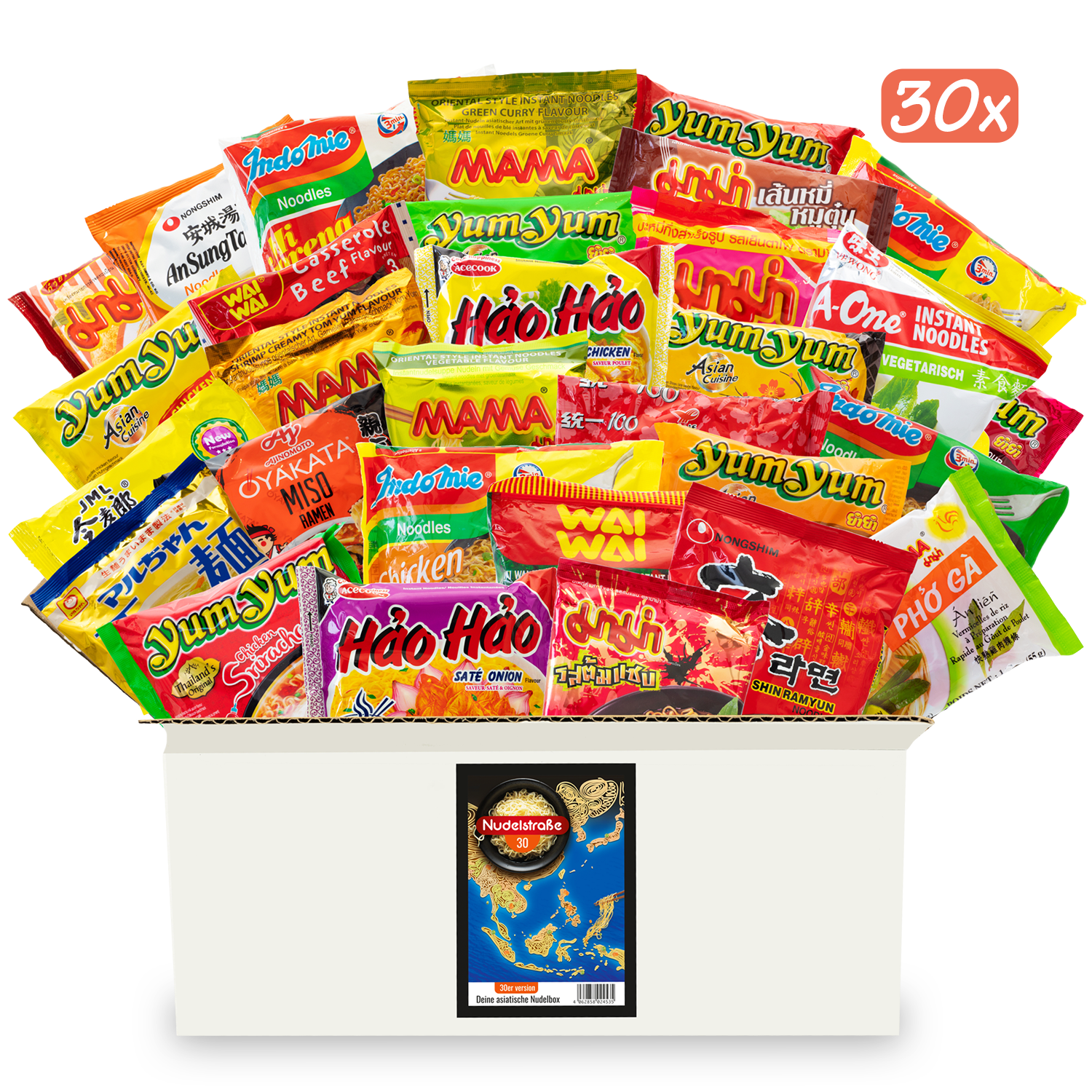
The Ba Mee surprise box stays with Thai noodles and is the right choice if you want to get to know this flavor profile in particular. Noodle Street mixes right across Asia instead: Thai packets sit next to Korean and Japanese ones, which pays off above all if you want to taste the countries against each other.
Both are surprise boxes, so you do not put the varieties together yourself. If you would rather pick deliberately, you are better served by the single snacks.
If you want it hotter
Thai heat is present, but it rarely stands alone; it is usually about the interplay with sourness and salt. If you are after the uncompromising version, Samyang Buldak from Korea is the better place to look. And how instant noodles became a mass product in the first place is something we tell in our piece on the history of instant ramen.