

Because chili in Korea is not a spice in the European sense but an ingredient you use in large amounts. Korean chili powder is comparatively mild and fruity, which is why it goes into the food by the spoonful rather than the pinch and brings color, sweetness and aroma along with the heat. Heat in Korea also almost never turns up on its own, but together with fermentation. And one thing up front: by no means everything is spicy.
Chili is surprisingly new in Korea
Chilies come from the Americas. They reached East Asia only in the course of the exchange between the continents from the 16th century onward. So for most of its history, Korean cooking worked entirely without chili.
Exactly when the plant reached Korea, and by which route, is not settled in the research. The most widespread account brings it into the country via Japan; other work contradicts this or points to a route via China. What is documented is that a Korean encyclopedia from the early 17th century describes the plant as something foreign and possibly poisonous. That does not sound like a staple food.
Things went on slowly after that, too. As far as we know today, kimchi turning red was a development considerably later than the arrival of the plant itself; chili in kimchi probably only became usual over the course of the 18th and 19th centuries. The red color that stands for Korean food today is therefore younger than the cuisine.
What provided the seasoning before chili
The foundation had long been there: salt, fermented soy products like 된장 (Doenjang) and 간장 (Ganjang), plus 젓갈 (Jeotgal), fermented seafood. This fermentation culture is older than the chili and simply took it in later.
Heat and pungency came from garlic (마늘), ginger (생강), scallions (파) and mustard (겨자). Added to that were 산초 and 초피, spices from relatives of Sichuan pepper, and black pepper (후추), which was imported and expensive.
Early kimchi was correspondingly pale: vegetables salted down without any chili at all. That version still exists today as 백김치 (Baek-kimchi), white kimchi. How salting and fermenting work in principle is covered at length in our post on how to ferment kimchi properly.
고춧가루 and 고추장 are two different things
고춧가루 (Gochugaru) is dried Korean chili, usually deseeded and coarsely ground. It is bright red, tastes fruity to slightly sweet and is mild compared to many other varieties. That is exactly why it can go into kimchi in such quantities. With Thai bird's eye chilies at the same dosage, the result would no longer be edible.
고추장 (Gochujang) is something else entirely: a fermented paste of chili powder, glutinous rice, fermented soybean meal (메주, Meju), barley malt and salt, which matures for months. During fermentation the starch in the rice is converted into sugar. The sweetness therefore comes out of the process and not out of added sugar.
That explains a good part of why Korean heat tastes different. It rarely comes neat, but embedded in salt, sweetness and umami, and it stands broadly in the background instead of stabbing sharply. Thai cooking works more often with fresh, very hot chilies, which comes across as sharper and clearer; Mexican cooking uses a large repertoire of dried varieties with smoky, dark notes. You can tell how that feels in practice with Tteokbokki: the sauce is spicy, sweet and salty at once, and most of that comes out of a single paste.
Heat and shelf life belong together
Behind it lies a very practical reason: hot, humid summers and cold winters. For centuries, preserving food by salting and fermenting was not a question of taste but of stocking up. 김장 (Kimjang), the communal salting of large amounts of kimchi in late autumn, goes back to exactly this logic.
The chili slotted into this system instead of replacing it. Gochujang is itself a fermented product, and in kimchi, gochugaru is not a spice sprinkled on afterwards but part of the seasoning paste that ferments along from the start. That is why heat in Korea is rarely an effect in its own right; it hangs on time, salt and fermentation.
Why spicy food is called “refreshing” in Korean
There is one word that sums up the Korean attitude to heat rather well: 시원하다 (siwonhada). Literally it means cool or refreshing, and you use it for a draft of air or a cold drink.
But it is just as normal to say 시원하다 about a boiling hot, spicy soup. What is meant then is not a temperature but the feeling during and afterwards. The phrase 속이 시원하다, literally “inside it is siwonhada”, describes relief and a sense of being unburdened.
Linguistically that is telling: in this way of thinking, spicy food is not something you bravely endure but something that puts you into a state. Once you have understood that, it is less surprising that people in Korea eat hot, spicy soup even at thirty degrees in the shade.
And no, it is not all spicy
Many of the best-known Korean dishes contain no chili at all: 불고기 (Bulgogi), 갈비 (Galbi), 잡채 (Japchae), 삼계탕 (Samgyetang), 계란찜 (Gyeranjjim) or the cold noodle soup 물냉면 (Mul-naengmyeon). And kimchi comes without chili, too.
Tolerance for heat also varies a lot from person to person, and people talk about it. There is the colloquial 맵부심 for the pride of being able to handle a lot of heat, and 맵찔이 for people who cannot. You say both among friends rather than at the office, because 맵찔이 is not particularly polite.
And products like the Buldak noodles are not everyday food but deliberately built to be extreme. They became known through internet challenges, and the appeal lies precisely in the fact that they are at the upper limit in Korea as well.
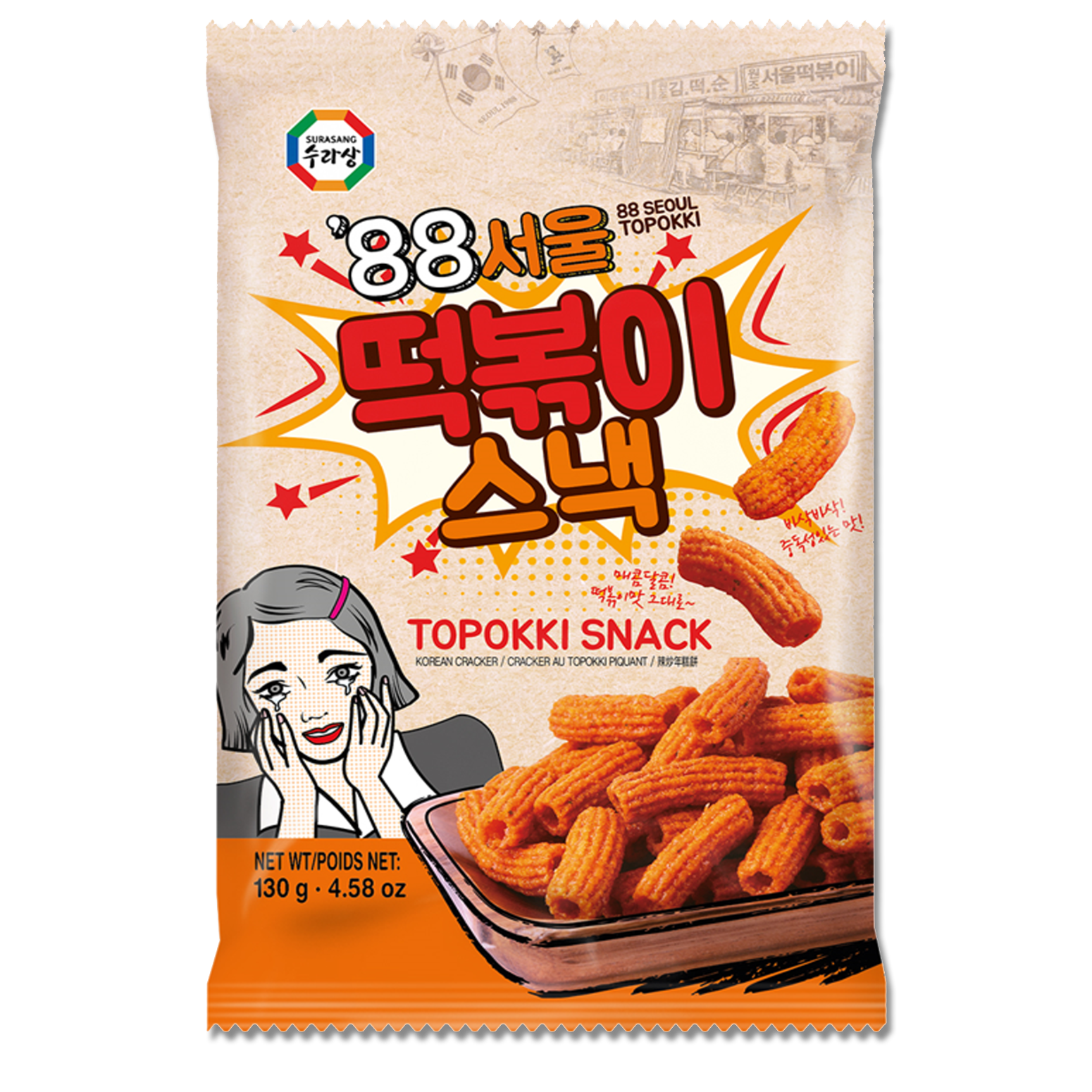
If you want to find out where your own limit lies, don't start with Buldak. A tteokbokki sauce made from gochujang or a simple kimchi stew will show you much better what Korean heat actually consists of: that it almost never stands on its own. In the Korea range you will find both sides, the spicy and the mild.




Leave a comment
This site is protected by hCaptcha and the hCaptcha Privacy Policy and Terms of Service apply.