

In South Korea, instant ramen belongs to everyday life as naturally as buttered bread does here. But how did a Japanese invention end up as a staple food in Korea of all places? And what do Koreans do with it that nobody else does?
What are Korean instant ramen?
Quickly explained: ramen means noodle. The word originally comes from the Chinese “Lamian”. Korean instant ramen are shelf-stable noodle dishes ready in a few minutes. They are among the most popular foods in South Korea. We'll briefly explain why.

In Korea itself, by the way, nobody says “Ramen”. There they are called 라면 (Ramyeon) – same root, its own pronunciation and by now a whole cuisine of its own around it.
The origin of Korean instant ramen
A Japanese man laid the foundation for South Korea's favorite food in 1958. Momofuku Ando managed to dry noodles in a special way to make them keep. He changed the Chinese word into the Japanese version “Ramen”. That name is used for instant noodles worldwide today.
Why Korean instant ramen are so popular in Korea
The first shelf-stable noodles reached the Korean market in the early 1960s. The instant ramen from the company Samyang were still very expensive, though. That only changed slowly after the Korean War. As a wheat-based food, instant ramen were considerably cheaper than rice. They also keep for a long time and taste good, of course. Their rise to becoming a South Korean staple had begun.
By now there are countless varieties, so you could eat instant ramen daily for weeks without hitting the same one twice.
How Koreans prepare their instant ramen
The biggest difference from the German packet-soup routine: in Korea you don't just add hot water, you cook it. Noodles, soup powder and vegetable flakes go together into a small pot on the stove. Water quantity and cooking time are on the packet – and most people stick to them fairly closely, because noodles that come out too soft count as a failure.
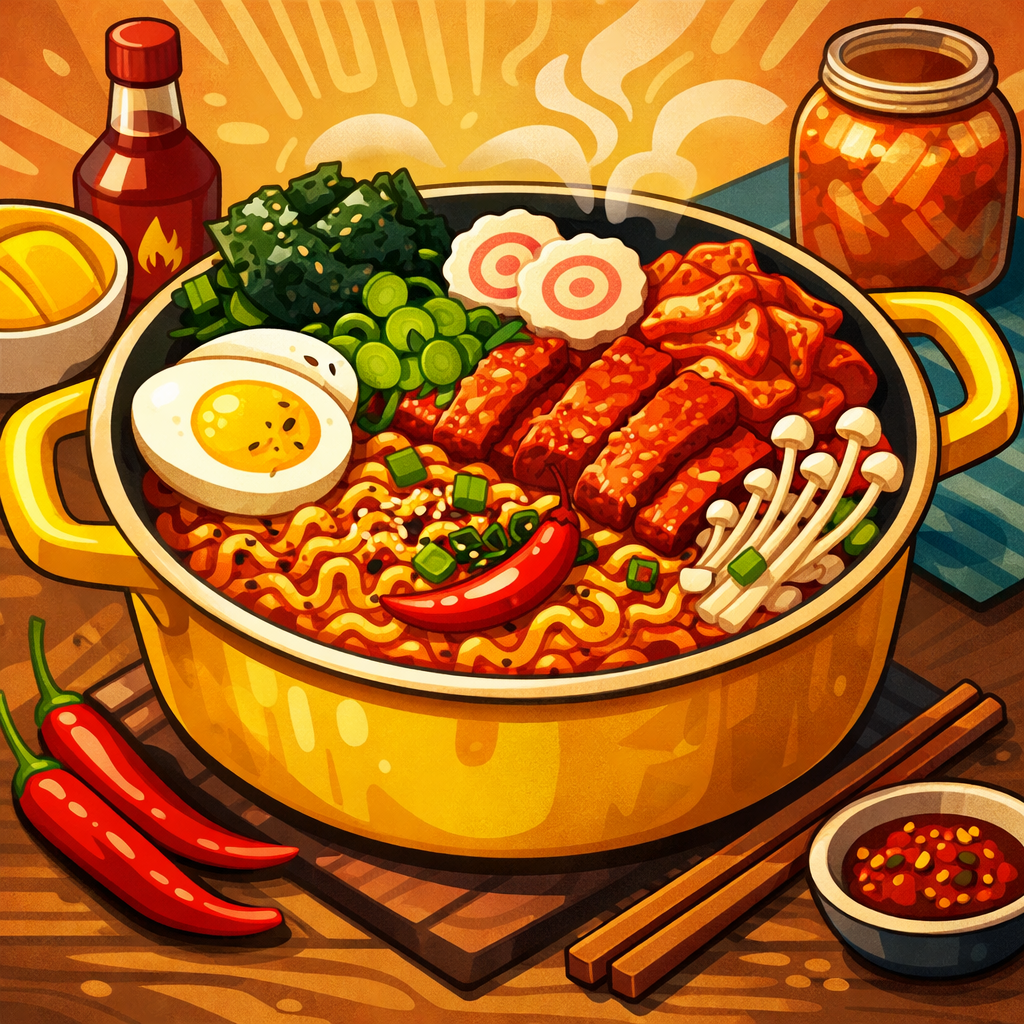
The classic is a thin pot of yellow aluminum, because it heats up fast. People often eat straight out of it, the lid serving as a plate. In goes whatever is around: an egg cracked into the broth at the end, spring onions, a slice of processed cheese, kimchi, mandu or rice cake sticks – ramyeon with tteok is called 라볶이 (Rabokki). And once the noodles are gone, plenty of people add a spoonful of rice to the leftover broth.

Ramyeon in everyday life: the convenience store
In Korea nobody has to go home for a bowl of ramyeon. Convenience stores have hot water dispensers, sometimes small cooking machines, plus a narrow counter at the window. You buy the cup, finish it on the spot and eat it there – on your lunch break, between things or late in the evening. These shops are a piece of Korean everyday life in themselves; we've devoted our own convenience store box to them.
Ramyeon in Korean pop culture
Because ramyeon is such a given, it turns up everywhere. In “Parasite” the housekeeper cooks 짜파구리 (Jjapaguri) on demand – two different kinds of instant noodles in one pot, turned into “Ram-don” in the English subtitles. After the film's release in 2019, the dish was cooked all over the world.
Then there is the Fire Noodle Challenge: videos of people working their way through Samyang's very spicy Buldak noodles have carried the brand from Korea around the world. And in mukbang videos, where someone eats in front of a running camera, the steaming bowl of ramyeon is a regular fixture.
It has even settled into everyday speech. The line “라면 먹고 갈래?” (Ramyeon meokgo gallae?) literally means “Do you want to have some ramyeon before you go?” – in Korea, though, it is understood as an invitation to come upstairs. If you don't know that, you'll regularly miss half the scene in Korean series.
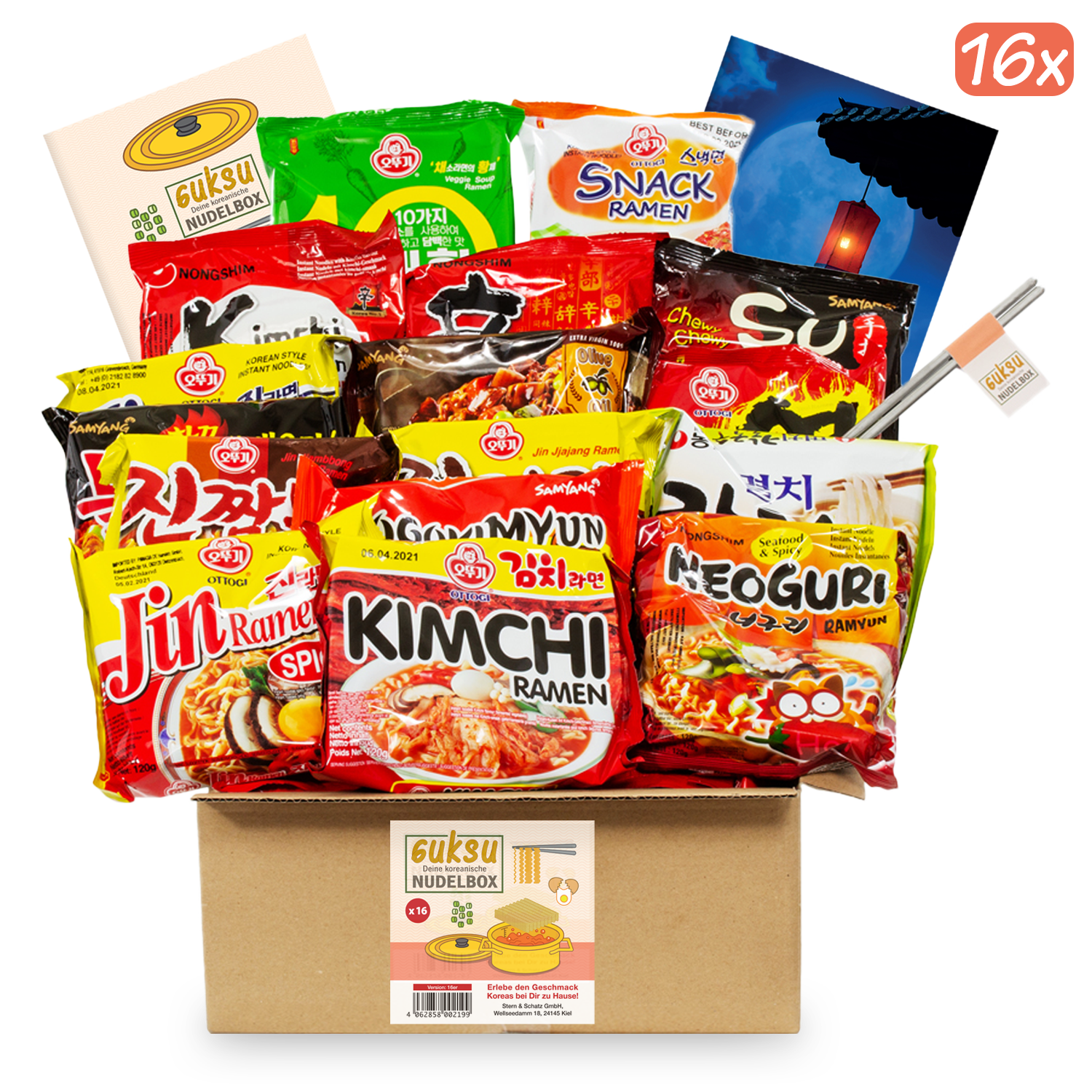
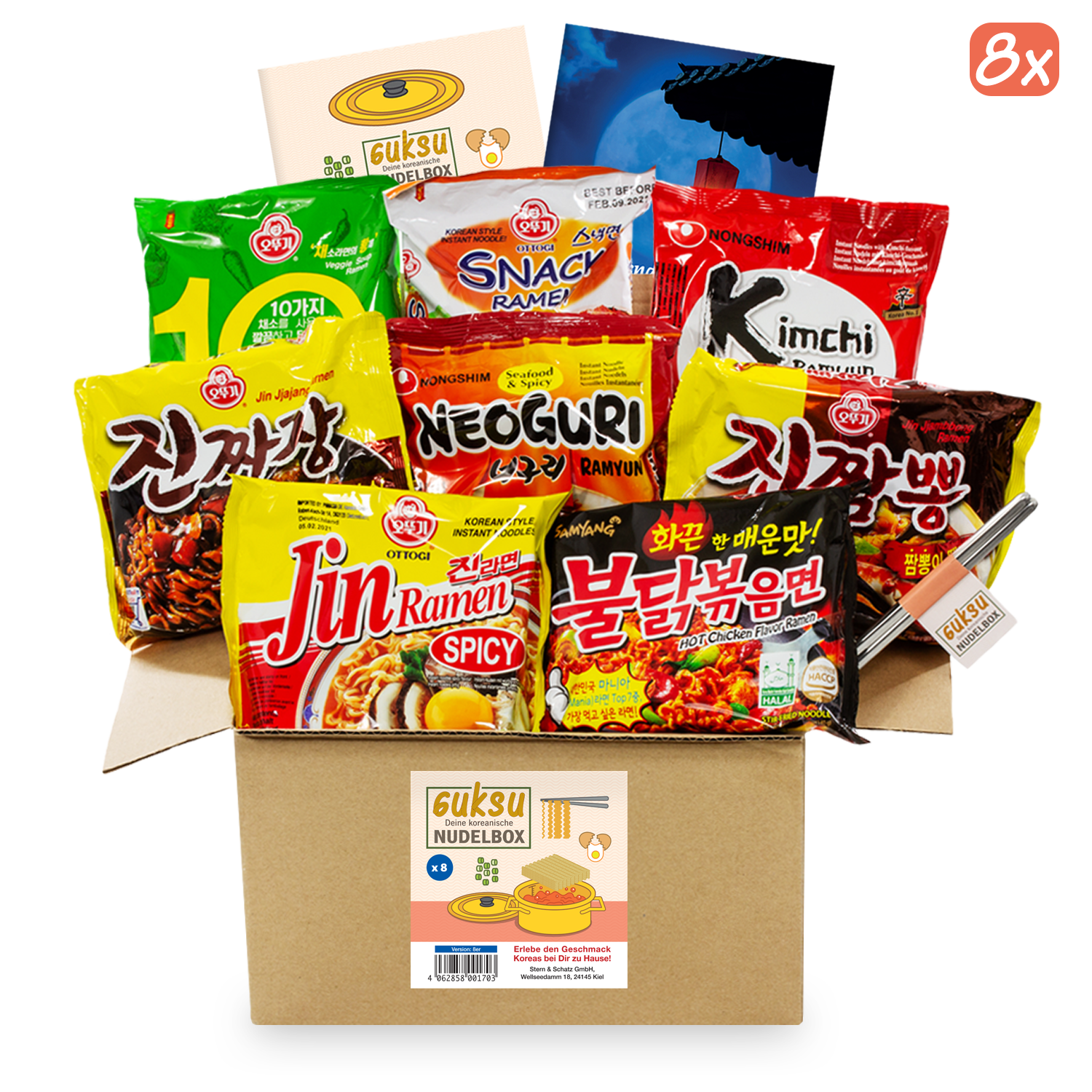
If you want to start yourself: our Guksu box with Korean instant ramen holds a selection of traditional varieties. Take a real pot instead of the microwave, stick to the time on the packet and crack an egg in at the end. That's all it takes to get started.






Leave a comment
This site is protected by hCaptcha and the hCaptcha Privacy Policy and Terms of Service apply.