

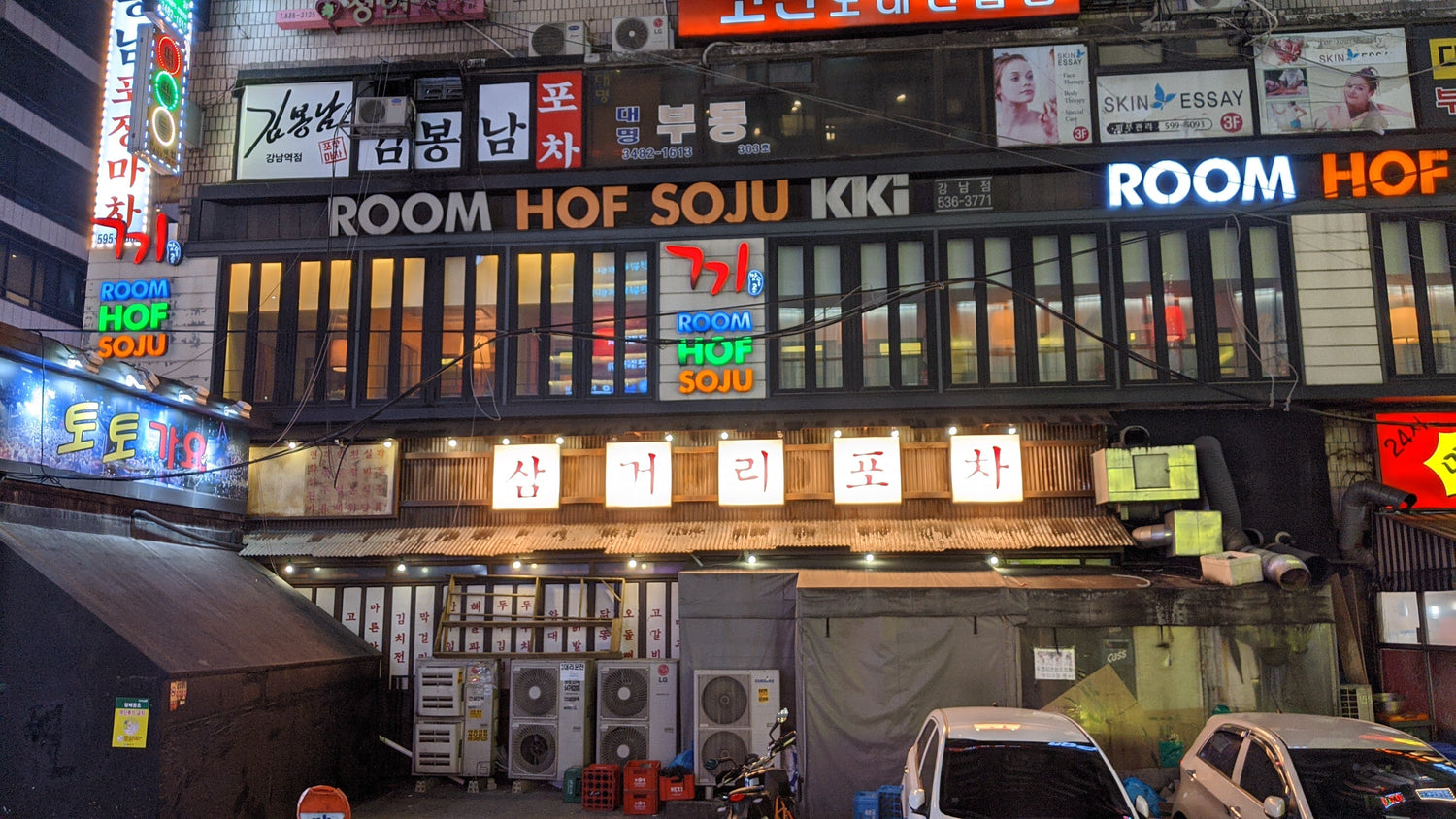
Walk through town in Korea and you will very often find the word “Hof” up in neon. As a German you don’t really understand what it is supposed to mean – even though Koreans really do mean the German word “Hof”, a yard or courtyard! Would you have guessed that it stands for a beer pub? The word is derived from the German “Hofbräuhaus”. It is fascinating which German words end up in use abroad, isn’t it?
In Korea, a “Hof” usually means a cozy bar or restaurant with beer at the center of things - often on tap and, ideally, served together with fried food such as chicken.
Interestingly, the term “Hof” has been established in Korea since the 1970s, when Western influences and the enthusiasm for beer culture were both growing. Owners wanted to give their venues an international, European flair with German names and lettering - much like the “Irish Pubs” you find in Germany. That is why you come across names like “Bier Hof”, “Munich Hof” or “German Hof”, often in blackletter type or decorated with pictures of beer steins and pretzels.












Leave a comment
This site is protected by hCaptcha and the hCaptcha Privacy Policy and Terms of Service apply.